
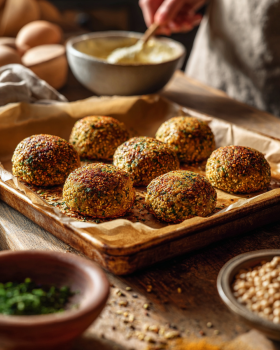
I used to think falafel had one rule: it had to be fried. No exceptions. That deep golden crunch? Impossible without oil, right?
But then one evening, standing in my kitchen with soaked chickpeas and absolutely zero desire to deep fry anything… I tried something different.
I baked them.
Honestly, I didn’t expect much. I thought they’d be dry, maybe a little sad. But when I opened the oven, the smell hit first—warm spices, garlic, herbs. Promising.
Then I picked one up. Crisp on the outside. Not hard—just that gentle crunch you hope for. I broke it open… soft, fluffy, full of flavor.
That first bite? I paused. Because it actually worked.
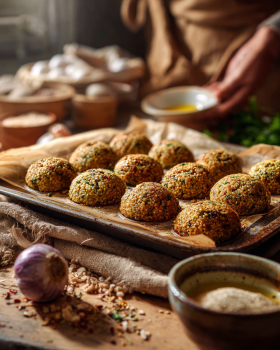
Since then, this baked homemade falafel crispy not fried recipe has become my go-to. It’s lighter, easier, and doesn’t leave your kitchen smelling like oil for hours.
And the best part? You still get that satisfying texture—crispy edges, tender center—without all the fuss.
It’s one of those recipes that quietly proves you don’t have to sacrifice flavor to make something healthier.
Recipe Resume (Why You Need This Now)
No deep frying mess.
Golden and crispy edges.
Soft, herby inside.
Packed with flavor.
Simple pantry ingredients.
Oven does the work.
Naturally vegetarian.
Perfect for meal prep.
Why This Baked Homemade Falafel Is The Only One You’ll Ever Need
The first time I made this, it was actually for a casual dinner with friends. I didn’t even tell them it was baked—I just served it with pita, hummus, and salad.
Halfway through the meal, someone said, “These are really good… did you fry them yourself?”
I smiled and said, “Nope. Oven.”
They didn’t believe me at first.
That’s when I realized this easy healthy baked falafel recipe from scratch wasn’t just a “lighter version.” It stood on its own.
Now, it’s my default. Weeknights, gatherings, even quick lunches—it always works.
Cuisine: Middle Eastern
What You Really Need to Make This Amazing Baked Falafel (Simplified)
- 1 ½ cups dried chickpeas (soaked overnight, not canned)
- 1 small onion, chopped
- 3 cloves garlic
- ½ cup fresh parsley
- ½ cup fresh cilantro
- 1 tsp cumin
- 1 tsp coriander
- ½ tsp baking soda
- 2–3 tbsp flour (or chickpea flour)
- Salt & pepper
- 2–3 tbsp olive oil
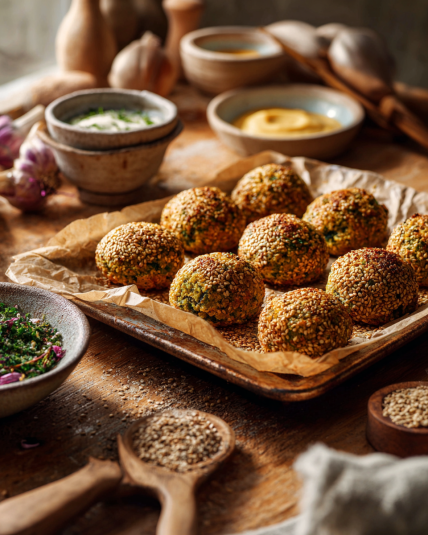
How to Master the Perfect Baked Falafel (My Secret Method)
Start by draining your soaked chickpeas. They should feel firm, not mushy—that’s key.
Add them to a food processor along with onion, garlic, herbs, and spices. Pulse slowly. You’re not making a paste—you want a slightly coarse mixture that still has texture.
Pause and check. If it looks too smooth, you’ve gone too far. That texture is what gives falafel its bite.
Transfer the mixture to a bowl. Stir in baking soda, flour, salt, and pepper. Let it rest for about 10–15 minutes. This helps everything hold together.
Preheat your oven and line a tray with parchment paper. Lightly brush or drizzle olive oil over it.
Shape the mixture into small balls or patties—whatever feels natural. Place them on the tray and gently flatten them just a bit.
Brush or drizzle a little more olive oil on top. This is what helps create that golden crust.
Bake until they’re deep golden on the outside. Flip halfway through so both sides get crispy.
When they’re done, they should feel firm outside but soft inside. Let them cool slightly… or don’t. I never wait.
Chef’s Notes and Tips For A Flawless Baked Falafel
The biggest mistake people make with an oven baked falafel with chickpeas no frying is using canned chickpeas. They’re too soft and will turn your mixture into a paste. Soaked dried chickpeas are non-negotiable here—they give structure and texture.
Also, don’t skip the oil. Even though this is baked, a light coating of olive oil is what creates that crisp exterior. Without it, you’ll miss that golden finish that makes falafel so satisfying.
Get Creative! Easy Substitutions and Fun Variations
No cilantro? Use all parsley—it still works beautifully.
Want extra spice? Add chili flakes or a pinch of cayenne.
For a gluten-free option, swap flour with chickpea flour or oat flour.
Try shaping them into sliders or stuffing them into wraps with tahini sauce for a fun twist.
You can even crumble leftover falafel over salads—it’s surprisingly good.
Lighten It Up! Simple Swaps for a Healthier Version
This low calorie falafel recipe without deep frying is already a lighter option, but you can tweak it further.
Use minimal oil—just enough to coat lightly.
Serve with yogurt-based sauces instead of heavy dressings.
Pair with fresh veggies instead of bread for a low-carb version.
And if you’re watching sodium, reduce salt and rely more on herbs and spices for flavor.
And there you have it!
Crispy, golden, and baked to perfection—no frying needed. Try it once, and you might never go back. Don’t forget to tell me how yours turned out… and maybe make extra. They disappear fast.
Are You Curious About Anything Else? Take a Look at the Most Frequently Asked Questions We Get About This Recipe:
1. Can baked falafel really be as crispy as fried?
Yes, and that’s the beauty of a baked homemade falafel crispy not fried recipe. While it won’t have the exact same deep-fried crunch, you can absolutely achieve a satisfying crisp exterior.
The key lies in using soaked chickpeas, maintaining a coarse texture, and adding a light coating of oil before baking. These elements work together to create a golden crust in the oven.
Additionally, flipping the falafel halfway through ensures even browning. When done right, the result is crisp on the outside and tender inside—without the heaviness of frying.
2. Why can’t I use canned chickpeas?
In an easy healthy baked falafel recipe from scratch, canned chickpeas are too soft and contain excess moisture. This leads to a mushy mixture that won’t hold its shape.
Soaked dried chickpeas, on the other hand, provide structure and a slightly firm texture. This is essential for achieving that classic falafel bite.
Using canned chickpeas might seem convenient, but it compromises both texture and flavor. For authentic results, soaking dried chickpeas overnight is worth it.
3. How do I keep baked falafel from falling apart?
This is a common concern when making oven baked falafel with chickpeas no frying. The trick is balancing moisture and texture.
If your mixture is too wet, add a little more flour. If it’s too dry, a small splash of water can help bind it.
Letting the mixture rest before shaping also improves consistency. And when shaping, press firmly so the falafel holds together during baking.
4. Can I freeze baked falafel?
Absolutely. This low calorie falafel recipe without deep frying freezes very well, making it perfect for meal prep.
You can freeze them before or after baking. If freezing raw, shape them first and store in a single layer before transferring to a container.
When ready to use, bake directly from frozen or reheat cooked falafel in the oven until warmed through and crisp again.
5. What sauces go best with baked falafel?
Falafel pairs beautifully with a variety of sauces. Tahini sauce is the classic choice—it’s creamy, nutty, and complements the herbs perfectly.
You can also use yogurt-based sauces, garlic sauce, or even hummus for a richer option.
The goal is balance. Since falafel is savory and slightly earthy, a creamy or tangy sauce enhances the overall experience.
6. Is baked falafel healthier than fried?
Yes, significantly. A baked homemade falafel crispy not fried version uses far less oil, which reduces overall fat and calorie content.
Frying absorbs oil, making traditional falafel heavier. Baking allows you to control how much oil is used while still achieving great flavor.
It’s a great option if you want something satisfying but lighter and easier to digest.
Why Baked Falafel Deserves a Second Look
4
servings30
minutes40
minutes300
kcalIngredients
1 ½ cups dried chickpeas (soaked overnight, not canned)
1 small onion, chopped
3 cloves garlic
½ cup fresh parsley
½ cup fresh cilantro
1 tsp cumin
1 tsp coriander
½ tsp baking soda
2 –3 tbsp flour (or chickpea flour)
Salt & pepper
2 –3 tbsp olive oil
Directions
- Start by draining your soaked chickpeas. They should feel firm, not mushy—that’s key.
- Add them to a food processor along with onion, garlic, herbs, and spices. Pulse slowly. You’re not making a paste—you want a slightly coarse mixture that still has texture.
- Pause and check. If it looks too smooth, you’ve gone too far. That texture is what gives falafel its bite.
- Transfer the mixture to a bowl. Stir in baking soda, flour, salt, and pepper. Let it rest for about 10–15 minutes. This helps everything hold together.
- Preheat your oven and line a tray with parchment paper. Lightly brush or drizzle olive oil over it.
- Shape the mixture into small balls or patties—whatever feels natural. Place them on the tray and gently flatten them just a bit.
- Brush or drizzle a little more olive oil on top. This is what helps create that golden crust.
- Bake until they’re deep golden on the outside. Flip halfway through so both sides get crispy.
- When they’re done, they should feel firm outside but soft inside. Let them cool slightly… or don’t. I never wait.
