
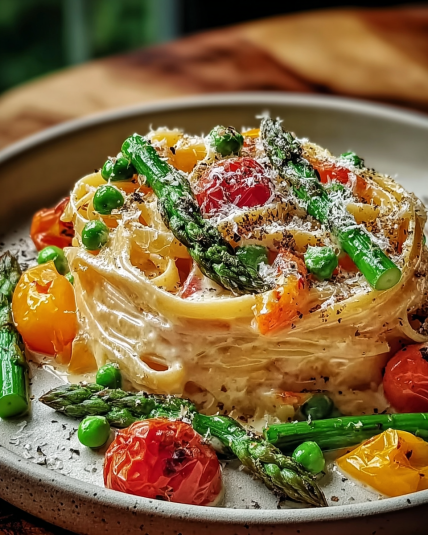
Some dinners taste like the season changed.
That’s exactly what happened the first time I made this spring vegetable pasta primavera recipe.
It was one of those first warm afternoons after weeks of gray weather—the kind where suddenly you want your windows open, your kitchen brighter, and absolutely nothing heavy for dinner.
I looked at the fridge and saw asparagus, zucchini, peas, and a suspicious amount of lemons.
Honestly, it felt like spring was politely demanding pasta.
So I listened.
The garlic hit the olive oil first, then the vegetables started softening, and suddenly the whole kitchen smelled fresh instead of tired. Bright. Alive. Like dinner had good intentions.
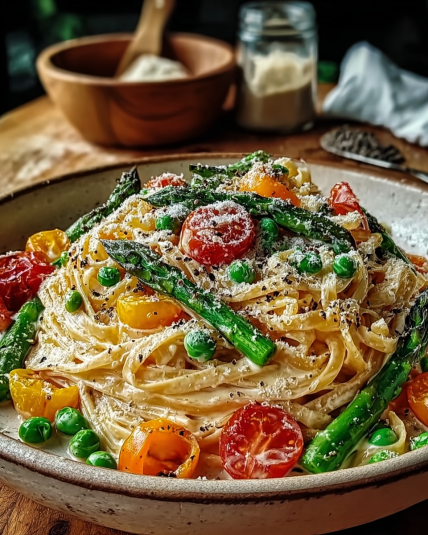
Then came the cream, just enough to make everything silky without turning it into a heavy restaurant Alfredo situation.
That little splash of lemon at the end? That’s the magic. It wakes everything up.
The first bite feels like comfort food that somehow also has its life together—tender pasta, crisp vegetables, creamy sauce, and that bright citrus finish that makes you immediately want another forkful.
Now this easy pasta primavera for weeknight dinner is my official “I need something fresh but still comforting” recipe.
Which, honestly, is often.
Quick Recipe Resume: Why You Need This Tonight
Fresh spring flavor.
Creamy but light.
Fast enough for weekdays.
Vegetables that actually feel exciting.
One bowl happiness.
Bright lemon magic.
Beautiful enough for guests.
Leftovers worth protecting.
Why This Spring Vegetable Pasta Primavera Is The Only One You’ll Ever Need
Cuisine: Italian-American
My sister once called this “the pasta version of opening the windows after winter.”
Ridiculously specific. Completely accurate.
The first time I served this creamy pasta primavera with fresh vegetables, everyone expected “healthy pasta,” which usually translates to emotional disappointment.
Instead?
Silence at the table. Forks moving quickly. Someone asking if there was more Parmesan.
That’s how I knew this one was staying.
I love it because it feels elegant without trying too hard. It’s colorful, flexible, and forgiving. No dramatic sauce reductions. No fancy chef panic.
Just good pasta and vegetables treated kindly.
Sometimes I add extra cream.
Sometimes I pretend I’m being responsible and add extra peas.
Both are valid life choices.
What You Really Need to Make This Amazing Spring Vegetable Pasta Primavera (Simplified)
- 12 oz pasta (penne, fettuccine, or spaghetti)
- 2 tablespoons olive oil
- 3 cloves garlic, minced
- 1 zucchini, sliced
- 1 bunch asparagus, cut into pieces
- 1 red bell pepper, sliced
- 1 cup peas
- 1 cup cherry tomatoes, halved
- 1 cup heavy cream
- ½ cup grated Parmesan cheese
- Juice of 1 lemon
- 1 teaspoon Italian seasoning
- Salt and black pepper
- Fresh basil or parsley
How to Master the Perfect Spring Vegetable Pasta Primavera (My Secret Method)
Start by boiling your pasta in generously salted water. Like “accidentally tasted the ocean” salty. That’s where flavor starts.
While that cooks, heat olive oil in a large skillet.
Add garlic first and let it get fragrant—not burnt, just that perfect “everyone suddenly walks into the kitchen” stage.
Toss in zucchini, asparagus, peppers, and peas. Cook them just until tender but still bright. Primavera should feel fresh, not sleepy.
Add cherry tomatoes near the end so they soften without disappearing into tomato memories.
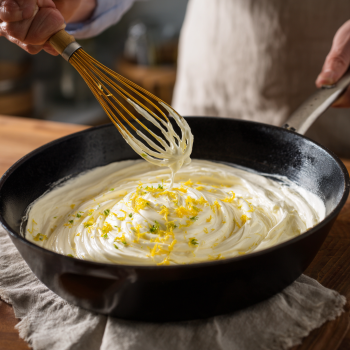
Pour in the cream and stir gently. Add Parmesan and let it melt into a silky, light sauce.
Now the important part: lemon juice.
Do not skip it. That’s the personality.
Add drained pasta straight into the pan, toss everything together, season well, and finish with herbs and extra Parmesan because obviously.
Serve immediately and act casual when everyone asks for seconds.
Chef’s Notes and Tips For A Flawless Spring Vegetable Pasta Primavera
Don’t overcook the vegetables. The whole beauty of a healthy spring pasta primavera recipe is that fresh texture. Mushy zucchini is not the dream.
Reserve a little pasta water before draining. If your sauce gets too thick, that starchy water fixes everything like tiny kitchen magic.
Fresh lemon juice matters more than bottled here. It gives that bright, clean flavor that makes lemon creamy vegetable pasta primavera taste alive.
And yes, extra Parmesan is always the correct answer.
Get Creative! Easy Substitutions and Fun Variations
Swap heavy cream for half-and-half if you want it lighter, or use mascarpone for something richer and slightly dramatic.
Add mushrooms, spinach, broccoli, or artichokes depending on what needs saving in your fridge.
Want protein? Grilled chicken, shrimp, or chickpeas work beautifully.
You can even make it spicy with red pepper flakes if your week requires emotional support from pasta.
Highly recommended.
Lighten It Up! Simple Swaps for a Healthier Spring Vegetable Pasta Primavera
For an even lighter healthy spring pasta primavera recipe, use whole wheat pasta or chickpea pasta for more fiber and protein.
Swap heavy cream for Greek yogurt mixed with a splash of pasta water for a lighter creamy texture.
Use less cheese and lean harder on lemon, herbs, and garlic for flavor.
You can also double the vegetables and slightly reduce the pasta ratio.
Still creamy. Still comforting. Just less “nap immediately afterward.”
Closing
And there you have it!
A spring vegetable pasta primavera recipe that tastes bright, cozy, and exactly like dinner should when the seasons start changing.
It’s creamy, fresh, comforting, and somehow makes vegetables feel like the main event.
Try it once and I promise—it’ll become part of your regular dinner rotation.
And don’t forget to let us know how your dish turns out, and maybe check out a few more of our favorite easy pasta recipes while you’re here.
Are You Curious About Anything Else? Take a Look at the Most Frequently Asked Questions We Get About This Recipe
1. What vegetables are best for pasta primavera?
The best vegetables are asparagus, zucchini, peas, bell peppers, cherry tomatoes, broccoli, spinach, and carrots.
The beauty of a spring vegetable pasta primavera recipe is flexibility—you can use what’s fresh, seasonal, or honestly just what’s about to go bad in your fridge.
2. Can I make pasta primavera ahead of time?
Yes, but it’s best enjoyed fresh.
If making ahead, slightly undercook the vegetables so they stay bright when reheated. Store the sauce separately if possible for the best texture.
3. Is pasta primavera supposed to be creamy?
It can be both ways.
Some versions are light and olive oil-based, while creamy pasta primavera with fresh vegetables uses a lighter cream sauce for extra comfort and richness.
4. Can I add protein to this recipe?
Absolutely.
Chicken, shrimp, salmon, white beans, or chickpeas all work beautifully and turn it into a fuller easy pasta primavera for weeknight dinner.
5. How do I keep the sauce from getting too thick?
Reserve pasta water before draining.
A splash added at the end helps loosen the sauce beautifully and keeps everything silky instead of sticky.
6. Can I make this recipe dairy-free?
Yes.
Use coconut cream or a plant-based cooking cream and skip Parmesan or use a dairy-free alternative. The lemon still keeps everything bright and delicious.
7. What pasta shape works best?
Penne, fettuccine, linguine, and spaghetti all work well.
Anything that holds sauce nicely makes lemon creamy vegetable pasta primavera even better.
8. Is pasta primavera healthy?
It absolutely can be.
Because it’s packed with vegetables and easy to customize, it fits beautifully into balanced meals—especially when using lighter cream, extra veggies, and smarter pasta choices.
Fresh Spring Vegetable Pasta Primavera with Creamy Zest
4
servings30
minutes40
minutes300
kcalIngredients
12 oz pasta (penne, fettuccine, or spaghetti)
2 tablespoons olive oil
3 cloves garlic, minced
1 zucchini, sliced
1 bunch asparagus, cut into pieces
1 red bell pepper, sliced
1 cup peas
1 cup cherry tomatoes, halved
1 cup heavy cream
½ cup grated Parmesan cheese
Juice of 1 lemon
1 teaspoon Italian seasoning
Salt and black pepper
Fresh basil or parsley
Directions
- Start by boiling your pasta in generously salted water. Like “accidentally tasted the ocean” salty. That’s where flavor starts.
- While that cooks, heat olive oil in a large skillet.
- Add garlic first and let it get fragrant—not burnt, just that perfect “everyone suddenly walks into the kitchen” stage.
- Toss in zucchini, asparagus, peppers, and peas. Cook them just until tender but still bright. Primavera should feel fresh, not sleepy.
- Add cherry tomatoes near the end so they soften without disappearing into tomato memories.
- Pour in the cream and stir gently. Add Parmesan and let it melt into a silky, light sauce.
- Now the important part: lemon juice.
- Do not skip it. That’s the personality.
- Add drained pasta straight into the pan, toss everything together, season well, and finish with herbs and extra Parmesan because obviously.
- Serve immediately and act casual when everyone asks for seconds.
