
There’s something about mornings in Morocco that just feel… slower. Softer. Like the day hasn’t fully decided what it wants to be yet.
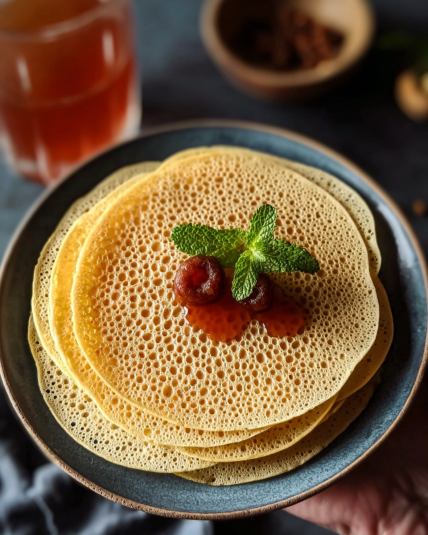
I grew up watching baghrir being made almost casually, like it didn’t require effort. A quick blend, a bit of waiting, and suddenly—tiny bubbles dancing across a pan.
The first time I tried making this easy Moroccan baghrir recipe step by step on my own, I expected it to be tricky. Those delicate holes? Surely that needed some kind of secret.
But as the batter rested, I noticed it changing—slightly airy, almost alive. That’s when it hit me: this recipe isn’t about perfection, it’s about patience.
When the first pancake hit the pan, I hovered. And then… the bubbles appeared. One, then dozens, then hundreds. I actually laughed out loud.
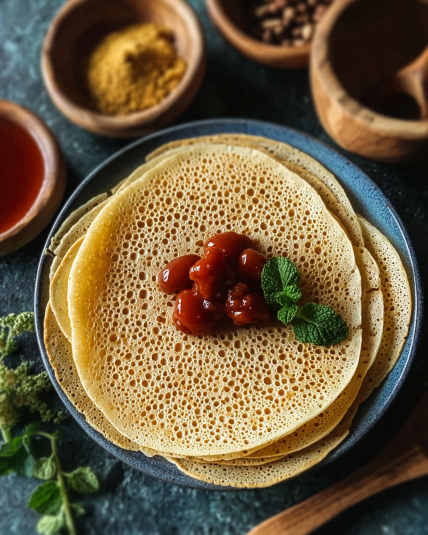
That smell—lightly yeasty, warm, comforting—filled the kitchen. It wasn’t loud or rich like pastries. It was subtle, inviting.
And when I drizzled that warm honey-butter over the top? It soaked right in, like the pancake was designed for it.
Now, every time I make fluffy Moroccan pancakes with semolina, it feels like bringing a piece of home to the table.
Simple, humble, and honestly? A little magical.
Recipe Resume (Selling Points)
Signature bubbly texture.
No flipping required.
Light, airy, and soft.
Perfect with honey butter.
Beginner-friendly recipe.
Quick blending method.
Authentic Moroccan comfort.
Feels fancy, but isn’t.
Why This Moroccan Baghrir Recipe Is The Only One You’ll Ever Need
I once made these on a lazy Sunday when friends came over unexpectedly. I didn’t have pastries, no plan, nothing impressive ready.
So I made baghrir.
At first, they looked confused—pancakes with holes? But then they tasted them. One friend literally paused mid-bite and said, “Wait… what is this?”
Now it’s become my quiet trick. When I want something comforting but different, this is it.
They’re not flashy. They don’t demand attention. But somehow, they win people over every time.
Cuisine: Moroccan
What You Really Need to Make This Amazing Moroccan Baghrir (Simplified)
- 1 cup fine semolina
- 1/2 cup all-purpose flour
- 1 tsp yeast
- 1 tsp baking powder
- 1 tbsp sugar
- 1/2 tsp salt
- 2 cups warm water
For serving:
- Butter
- Honey
How to Master the Perfect Moroccan Baghrir (My Secret Method)
Start by blending everything—yes, blending. It feels unusual, but trust the process. You want a smooth, pourable batter, almost like cream.
Let it rest. This is where the magic begins. The yeast wakes up, tiny bubbles form, and the batter becomes slightly airy.
Heat a non-stick pan—no oil needed. Pour a small ladle of batter right in the center and let it spread naturally.
Then just… watch.
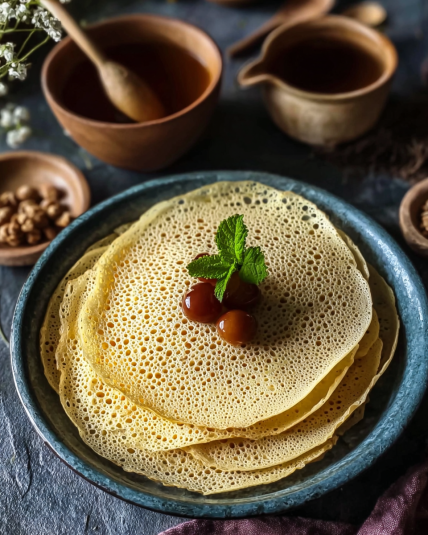
The surface will fill with holes. That’s your sign you’re doing it right. Don’t flip it—baghrir cooks on one side only.
Once the top looks set and no longer wet, it’s ready. Soft, spongy, full of tiny pockets.
Stack them gently, and keep going. They come together faster than you expect.
Serve warm with melted butter and honey poured generously over the top.
Chef’s Notes and Tips For A Flawless Moroccan Baghrir
The most important thing? Batter consistency. If it’s too thick, you won’t get those signature holes. It should pour easily, almost like a thin pancake batter.
Also, temperature matters. If your pan is too hot, the holes won’t form properly. Medium heat gives you that slow, even bubble formation.
Let the batter rest long enough—don’t rush it. Even 10–15 minutes can make a big difference in texture and flavor.
Get Creative! Easy Substitutions and Fun Variations
You can replace part of the water with milk for a slightly richer taste.
Add a touch of orange blossom water for a subtle floral aroma—it’s not traditional everywhere, but it’s beautiful.
For savory versions, skip the honey and serve with cheese or olive oil.
Some even top baghrir with jam, yogurt, or nuts—it’s more versatile than people think.
Lighten It Up! Simple Swaps for a Healthier Moroccan Baghrir
Use whole wheat flour instead of white flour for added fiber.
Reduce sugar slightly—the honey topping already adds sweetness.
You can also use plant-based butter or skip it entirely and go lighter on toppings.
Closing
And there you have it! Soft, airy, and quietly unforgettable. Don’t forget to let us know how your dish turns out, and consider checking out some of our other Recipes.
Are You Curious About Anything Else? Take a Look at the Most Frequently Asked Questions We Get About This Recipe:
1. How do I make an easy Moroccan baghrir recipe step by step at home?
Making an easy Moroccan baghrir recipe step by step at home is actually simpler than it looks. The key is blending your ingredients into a smooth batter and allowing it to rest so the yeast activates properly.
Once rested, cooking is incredibly straightforward. You pour the batter into a pan and let it cook on one side only. The bubbles form naturally, creating that signature spongy texture.
It’s less about technique and more about patience and consistency—once you get that right, it becomes second nature.
2. Why do my fluffy Moroccan pancakes with semolina not have holes?
This is one of the most common issues. Usually, it comes down to batter thickness or temperature. If the batter is too thick, the bubbles can’t rise properly.
Another factor is heat. If your pan is too hot, the bottom cooks too quickly before bubbles can form on top. Medium heat allows gradual cooking and proper hole formation.
Finally, make sure your yeast is active. Without it, the batter won’t develop the airy structure needed.
3. Can I make traditional Moroccan baghrir with honey butter ahead of time?
Yes, you can prepare baghrir ahead of time and reheat them gently before serving. They store well in the fridge for a couple of days.
When reheating, use a pan or steam them lightly to bring back their softness. Avoid microwaving too long, as it can dry them out.
The honey butter can be prepared fresh or in advance—it’s what brings everything together.
4. What is the difference between baghrir and regular pancakes?
Baghrir differs mainly in texture and cooking method. Unlike regular pancakes, they are cooked on one side only and have a porous, spongy surface.
They’re also lighter and less dense, thanks to the semolina and yeast combination. This gives them a unique ability to absorb sauces like honey and butter.
Regular pancakes are flipped and have a uniform texture, while baghrir is all about those delicate holes.
5. Can I freeze Moroccan baghrir?
Yes, baghrir freezes surprisingly well. Once cooled, stack them with parchment paper between layers and freeze in an airtight container.
When ready to eat, thaw and reheat gently. Steaming or warming in a pan works best to preserve their texture.
They’re perfect for batch cooking and busy mornings.
6. How do I serve baghrir for a Moroccan breakfast?
Traditionally, baghrir is served warm with a generous drizzle of honey and melted butter. It’s simple but incredibly satisfying.
You can also pair it with tea, olives, or soft cheese for a more complete Moroccan breakfast experience.
The key is serving them fresh and warm—they’re at their best right off the pan.
7. Can I make baghrir without yeast?
Technically yes, but it won’t be the same. Yeast is what gives baghrir its airy structure and signature holes.
Without it, you’ll get something closer to a flat pancake. You can try increasing baking powder, but the texture will differ.
For authentic results, yeast is highly recommended.
Fluffy Moroccan Pancakes (Baghrir) That Will Wow Your Breakfast
4
servings30
minutes40
minutes300
kcalIngredients
1 cup fine semolina
1/2 cup all-purpose flour
1 tsp yeast
1 tsp baking powder
1 tbsp sugar
1/2 tsp salt
2 cups warm water
For serving:
Butter
Honey
Directions
- Start by blending everything—yes, blending. It feels unusual, but trust the process. You want a smooth, pourable batter, almost like cream.
- Let it rest. This is where the magic begins. The yeast wakes up, tiny bubbles form, and the batter becomes slightly airy.
- Heat a non-stick pan—no oil needed. Pour a small ladle of batter right in the center and let it spread naturally.
- Then just… watch.
- The surface will fill with holes. That’s your sign you’re doing it right. Don’t flip it—baghrir cooks on one side only.
- Once the top looks set and no longer wet, it’s ready. Soft, spongy, full of tiny pockets.
- Stack them gently, and keep going. They come together faster than you expect.
- Serve warm with melted butter and honey poured generously over the top.
