
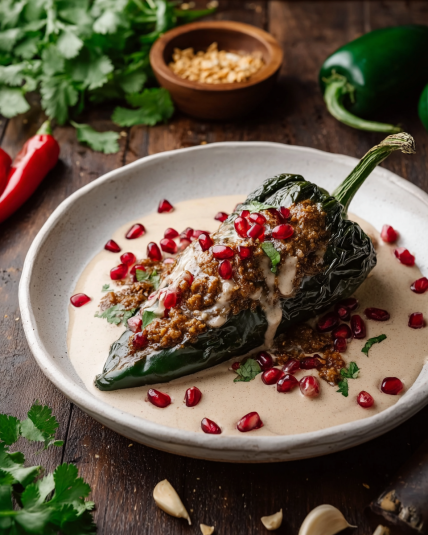
I still remember the first time I saw chiles en nogada served.
It wasn’t just food—it looked like a celebration sitting quietly on a plate.
Green poblano peppers, creamy white sauce, and those jewel-like pomegranate seeds scattered on top. I almost didn’t want to touch it.
But curiosity always wins in my kitchen.
The first bite surprised me in the best way. Warm, savory filling… then sweetness… then that silky walnut sauce wrapping everything together.
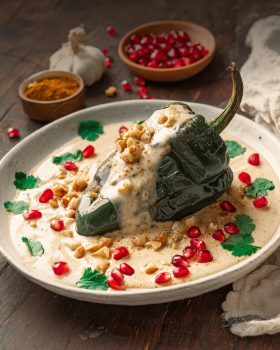
It wasn’t loud or overpowering. It was layered. Gentle. Thoughtful.
I went home that day thinking, “I need to learn this.”
And I won’t lie—my first attempt? A little messy. Sauce too thick, filling slightly off balance. But even then, it had something special.
Now, this authentic chiles en nogada recipe with walnut sauce has become one of those dishes I make when I want to slow down and enjoy cooking again.
Recipe Resume (Why You Need This Now)
Elegant but approachable.
Sweet and savory magic.
Creamy walnut sauce.
Perfect balance of textures.
A true showstopper.
Customizable filling.
Rich cultural flavor.
Worth every bite.
Why This Chiles en Nogada Is The Only One You’ll Ever Need
I made this once for a small gathering—nothing fancy, just friends, good music, and a slightly chaotic kitchen.
I remember plating the peppers, pouring the sauce, and carefully adding pomegranate seeds like it actually mattered (it did).
Someone took a bite and paused.
Then came the “wow.”
Not dramatic. Just honest.
That’s when I realized—this traditional Mexican chiles en nogada step by step recipe isn’t about perfection. It’s about balance and care.
It looks impressive, yes. But it’s really just a series of simple steps done thoughtfully.
Cuisine: Mexican
What You Really Need to Make This Amazing Chiles en Nogada (Simplified)
For the peppers & filling:
- 4 poblano peppers
- 300g ground beef or pork
- 1 onion (chopped)
- 2 garlic cloves
- 1 tomato (chopped)
- 1 apple (diced)
- 2 tbsp raisins
- 2 tbsp almonds (chopped)
- 1 tsp cinnamon
- Salt & pepper
For the walnut sauce:
- 1 cup walnuts (soaked, peeled)
- ½ cup milk or cream
- 2 tbsp cream cheese
- 1 tbsp sugar
- Pinch of salt
Topping:
- Fresh pomegranate seeds
- Parsley
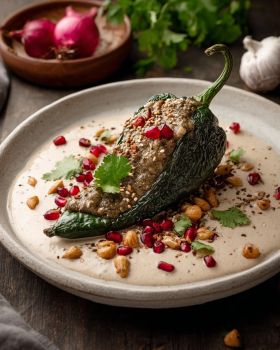
How to Master the Perfect Chiles en Nogada (My Secret Method)
Start with the peppers. Roast them over a flame or in the oven until the skin blisters and blackens slightly. Then cover them—this part matters—so they steam and soften.
Peeling them later will feel oddly satisfying.
Meanwhile, build your filling.
Cook onion and garlic slowly, letting them soften and release that comforting aroma. Add the meat and let it brown gently.
Then comes the twist—fruit and nuts.
Apple, raisins, almonds… it might feel unusual, but this is what gives that signature sweet-savory depth in how to make sweet savory stuffed poblano peppers.
Let everything simmer until rich and slightly thick.
For the sauce, blend the walnuts with milk, cheese, and sugar until smooth. Taste it—it should be creamy, slightly sweet, and delicate.
Stuff the peppers carefully, spoon the sauce over, and finish with pomegranate seeds.
That’s your easy chiles en nogada with pomegranate seeds at home moment.
Chef’s Notes and Tips For A Flawless Chiles en Nogada
The walnut sauce is the heart of this dish. Always soak and peel the walnuts—it removes bitterness and gives you that smooth, luxurious texture.
Also, let the filling rest before stuffing. It helps the flavors settle and makes handling much easier.
Get Creative! Easy Substitutions and Fun Variations
Swap the meat for mushrooms or lentils for a vegetarian version.
You can also add pear or peach for a slightly sweeter twist on this traditional Mexican chiles en nogada step by step recipe.
Lighten It Up! Simple Swaps for a Healthier Chiles en Nogada
Use lean ground turkey instead of beef.
For a lighter best walnut cream sauce for chiles en nogada, reduce the cheese and use low-fat milk—it still stays creamy and delicious.
Closing
And there you have it. A dish that feels special, tastes incredible, and brings a little celebration to your table. Once you try it, you’ll understand why it’s unforgettable.
Are You Curious About Anything Else? Take a Look at the Most Frequently Asked Questions We Get About This Recipe:
1. What makes an authentic chiles en nogada recipe with walnut sauce truly authentic?
An authentic chiles en nogada recipe with walnut sauce relies on balance—savory meat combined with fruits like apples and raisins, finished with a delicate walnut sauce.
Traditionally, it also reflects Mexican heritage through its ingredients and presentation. Using fresh poblano peppers and properly prepared walnuts is essential for achieving that authentic flavor.
2. How do I make easy chiles en nogada with pomegranate seeds at home without mistakes?
To make easy chiles en nogada with pomegranate seeds at home, focus on preparation. Roast and peel peppers properly, and don’t rush the filling.
Also, assemble just before serving so the sauce stays fresh and the pomegranate seeds maintain their texture and color.
3. Why is my walnut sauce not smooth?
The most common issue is skipping the peeling step.
For the best walnut cream sauce for chiles en nogada, soaking and peeling walnuts ensures a smooth, non-bitter finish that blends perfectly.
4. Can I prepare traditional Mexican chiles en nogada step by step ahead of time?
Yes, you can prepare each component separately.
Store the filling and sauce in the fridge, then assemble when ready to serve for the best texture and flavor.
5. What is the best fruit combination for the filling?
Apples and raisins are classic.
They create that signature sweet contrast that defines how to make sweet savory stuffed poblano peppers in this dish.
6. Can I freeze chiles en nogada?
Freezing is possible but not ideal.
The sauce may separate, so if you do freeze, store components separately and prepare fresh sauce when serving.
7. What makes this dish special for celebrations?
It’s the combination of flavor, color, and tradition.
This authentic chiles en nogada recipe with walnut sauce represents more than just a meal—it’s a cultural experience on a plate.
8. How do I balance the sweetness and savory flavors perfectly?
Taste as you go.
Adjust the fruit and seasoning gradually so the dish doesn’t lean too sweet or too savory—balance is everything in this recipe.
Chiles en Nogada with Pomegranate and Walnut Sauce
4
servings30
minutes40
minutes300
kcalIngredients
For the peppers & filling:
4 poblano peppers
300 g ground beef or pork
1 onion (chopped)
2 garlic cloves
1 tomato (chopped)
1 apple (diced)
2 tbsp raisins
2 tbsp almonds (chopped)
1 tsp cinnamon
Salt & pepper
For the walnut sauce:
1 cup walnuts (soaked, peeled)
½ cup milk or cream
2 tbsp cream cheese
1 tbsp sugar
Pinch salt
Topping:
Fresh pomegranate seeds
Parsley
Directions
- Start with the peppers. Roast them over a flame or in the oven until the skin blisters and blackens slightly. Then cover them—this part matters—so they steam and soften.
- Peeling them later will feel oddly satisfying.
- Meanwhile, build your filling.
- Cook onion and garlic slowly, letting them soften and release that comforting aroma. Add the meat and let it brown gently.
- Then comes the twist—fruit and nuts.
- Apple, raisins, almonds… it might feel unusual, but this is what gives that signature sweet-savory depth in how to make sweet savory stuffed poblano peppers.
- Let everything simmer until rich and slightly thick.
- For the sauce, blend the walnuts with milk, cheese, and sugar until smooth. Taste it—it should be creamy, slightly sweet, and delicate.
- Stuff the peppers carefully, spoon the sauce over, and finish with pomegranate seeds.
- That’s your easy chiles en nogada with pomegranate seeds at home moment.
