
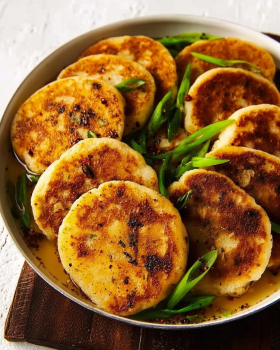
There’s something quietly magical about potatoes. Humble, reliable, always there when you need comfort. Patatokeftedes are one of those recipes that start with leftovers and somehow end up stealing the show.
The first time I made these Greek mashed potato cakes, it was accidental. Cold mashed potatoes in the fridge, a drizzle of olive oil on the counter, herbs that needed using. One pan later, the kitchen smelled like something my grandmother might have made—even though she wasn’t Greek.
That aroma—crispy edges, warm potato centers, herbs hitting hot oil—instantly slows you down. You stop scrolling. You peek into the pan. You flip one just a little too early because you’re curious.
Patatokeftedes are rustic food. They’re not meant to be perfect circles or identical sizes. Each one is a little different, like fingerprints made of potatoes.
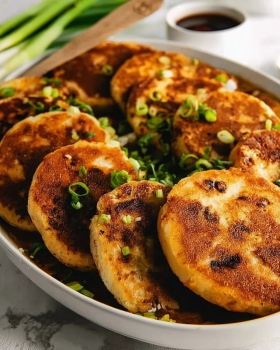
They work as a meze, a side dish, or a full dinner with a simple salad. They’re comforting without being heavy. Familiar, yet quietly exciting.
And yes, they disappear fast. I’ve learned to double the batch every single time.
If you’re looking for an authentic patatokeftedes recipe that feels truly homemade, you’re in the right kitchen.
Recipe Resume – Why You’ll Love These
Crispy outside.
Soft and fluffy inside.
Perfect use for leftovers.
Naturally comforting.
Budget-friendly.
Quick stovetop cooking.
Customizable flavors.
Pure Greek soul food.
Why This Patatokeftedes Recipe Is The Only One You’ll Ever Need
I served these once alongside grilled fish, thinking they’d play a supporting role. They didn’t. People kept reaching for “just one more.”
This version balances texture and flavor—crispy enough to hear the crunch, soft enough to melt mid-bite. The herbs and feta bring brightness without overpowering the potatoes.
Cuisine: Greek / Mediterranean
What You Really Need to Make This Amazing Patatokeftedes (Simplified)
- Mashed potatoes (cold works best)
- Egg
- Feta cheese, crumbled
- Fresh parsley or dill
- Green onion
- Olive oil
- All-purpose flour
- Salt and black pepper
How to Master the Perfect Patatokeftedes (My Secret Method)
Start with cold mashed potatoes. Warm potatoes make the mixture loose and hard to shape. Cold ones behave—trust me.
Mix gently. Add egg, herbs, feta, and seasoning, folding everything together just until combined. You’re not kneading bread here; overmixing makes them dense.
Sprinkle in flour gradually. You want a mixture that holds its shape when scooped but still feels tender, not stiff.
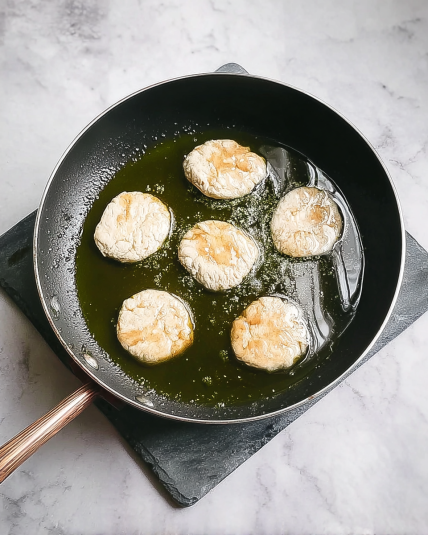
Heat olive oil until it shimmers. Scoop small patties, flatten lightly, and place them gently in the pan. Listen for that soft sizzle—that’s your cue you’re on the right track.
Flip once. Don’t rush. Let a golden crust form before turning. When they’re done, rest them briefly on paper towels, then serve warm.
Chef’s Notes and Tips For A Flawless Patatokeftedes
If your mixture feels too soft, chill it for 15 minutes instead of adding more flour. Flour fixes structure but steals tenderness.
Use medium heat. High heat browns too fast and leaves the centers cold. Patience here pays off in perfect texture.
Get Creative! Easy Substitutions and Fun Variations
Swap feta for grated kefalotyri or even parmesan. Add grated zucchini (squeezed dry) for a veggie-packed twist.
Serve with tzatziki, garlic yogurt, or even a squeeze of lemon for contrast.
Lighten It Up! Simple Swaps for a Healthier Patatokeftedes
Pan-fry with minimal olive oil or bake at high heat for a lighter version.
Use whole wheat flour or chickpea flour for extra fiber and protein.
Closing
And there you have it—golden, crispy Greek comfort made from the simplest ingredients. If you make these patatokeftedes, tell me how fast they disappeared. And while you’re here, don’t miss the other cozy Greek recipes waiting for you.
Are You Curious About Anything Else? Take a Look at the Most Frequently Asked Questions We Get About This Recipe
What are traditional Greek patatokeftedes?
Patatokeftedes are traditional Greek potato fritters made from mashed potatoes, herbs, and often feta cheese. They’re commonly served as meze or side dishes.
Unlike heavier potato cakes, authentic patatokeftedes are light inside with crisp edges, relying on olive oil and herbs for flavor rather than heavy seasoning.
Can I use leftover mashed potatoes for patatokeftedes?
Absolutely—and it’s encouraged. Cold leftover mashed potatoes actually make the best base.
Just be mindful if your leftovers already contain butter or milk. Adjust seasoning and flour accordingly to keep balance.
Why are my potato cakes falling apart?
This usually means the mixture is too warm or too wet. Chilling firms everything up naturally.
Adding too much flour can “fix” it, but chilling preserves the soft interior that defines Greek mashed potato cakes.
Are patatokeftedes gluten-free?
Traditional recipes use flour, but you can easily substitute gluten-free flour or chickpea flour.
The texture remains crispy and satisfying when pan-fried correctly.
Can patatokeftedes be baked instead of fried?
Yes. Bake at high heat (220°C / 425°F) with lightly oiled patties, flipping once.
They’ll be slightly less crispy but still delicious and lighter.
What herbs work best in patatokeftedes?
Parsley and dill are classic. Dill adds a distinctly Greek aroma.
You can mix in mint or chives for a fresh variation without losing authenticity.
How do I store leftover Greek potato cakes?
Store in an airtight container in the fridge for up to 3 days.
Reheat in a pan or air fryer to bring back crispness—avoid the microwave if possible.
What should I serve with patatokeftedes?
They pair beautifully with grilled meats, fish, or a simple Greek salad.
As a meze, serve with tzatziki, lemon wedges, and olives for a complete Greek spread.
Patatokeftedes (Mashed Potato Cakes)
4
servings30
minutes40
minutes300
kcalIngredients
Mashed potatoes (cold works best)
Egg
Feta cheese, crumbled
Fresh parsley or dill
Green onion
Olive oil
All-purpose flour
Salt and black pepper
Directions
- Start with cold mashed potatoes. Warm potatoes make the mixture loose and hard to shape. Cold ones behave—trust me.
- Mix gently. Add egg, herbs, feta, and seasoning, folding everything together just until combined. You’re not kneading bread here; overmixing makes them dense.
- Sprinkle in flour gradually. You want a mixture that holds its shape when scooped but still feels tender, not stiff.
- Heat olive oil until it shimmers. Scoop small patties, flatten lightly, and place them gently in the pan. Listen for that soft sizzle—that’s your cue you’re on the right track.
- Flip once. Don’t rush. Let a golden crust form before turning. When they’re done, rest them briefly on paper towels, then serve warm.
