
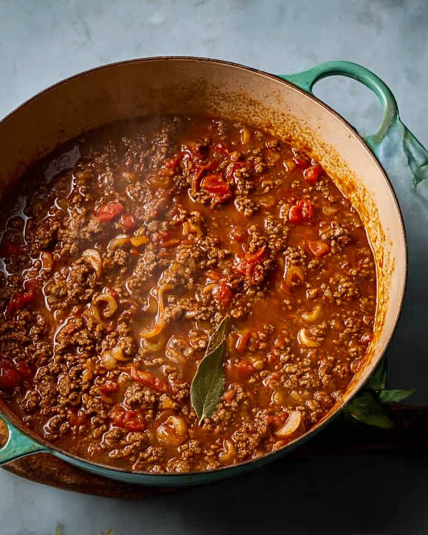
I can still remember the very first time I made a pot of true Italian-style Bolognese—slow, quiet, and honestly a little meditative. The whole thing started because I had one of those long, dragging afternoons where all you want is a meal that tastes like someone spent all day caring about you. I pulled out my Dutch oven, grabbed a few humble ingredients, and told myself, just let it be simple.
It didn’t stay simple for long. Within minutes, the onions softened into a gentle sweetness, the carrots and celery released that earthy, cozy aroma, and suddenly my kitchen felt like a tiny trattoria tucked somewhere in Bologna. It’s funny how fast a recipe can change the mood of an entire day.
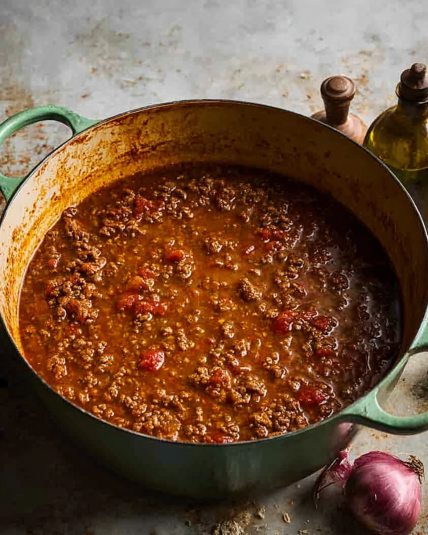
When the meat hit the pan, the sizzle made that “oh yes, this is going to be something good” sound. And then the wine—well, the moment it hit the pot, everything smelled like it had a whole story behind it. I leaned over the steam like it was perfume and thought, okay, I get it now. This is why people swear by a real slow simmer Italian Bolognese.
By the time I added the milk (yes, milk—it mellows everything into velvet), the sauce had already become something richer and softer than I expected. And when I finally tossed it with pasta that evening, even my spouse—who rarely reacts to anything beyond “that’s good”—went quiet and then just nodded slowly. That’s when I knew this recipe was a keeper.
Recipe Resume (Selling Points)
Deep, rich, all-day flavor without the all-day effort.
Classic Italian technique, simplified for real kitchens.
Milk makes the sauce impossibly silky.
Budget ingredients → luxury taste.
Freezer-friendly, meal-prep gold.
Perfect with tagliatelle, pappardelle, or lasagna.
Kid-approved, dinner-party impressive.
The kind of sauce that makes people linger at the table.
Why This Classic Bolognese Sauce Is The Only One You’ll Ever Need
A few winters ago, we invited friends over on a whim—messy house, unplanned dinner, the usual chaos. I had a pot of this traditional meat ragu simmering quietly when they arrived. Everyone took one bite and suddenly the kitchen was silent in the funniest way. Someone whispered, “Wait… why is this so good?” And that’s how this sauce became our unofficial “company’s coming” staple.
Cuisine: Italian (Emilia-Romagna, specifically)
What You Really Need to Make This Amazing Classic Bolognese Sauce (Simplified)
- Olive oil + butter
- Onion, carrots, celery
- Ground beef + ground pork
- Tomato paste
- Red wine
- Whole milk
- Crushed tomatoes or passata
- Salt, pepper, bay leaf
- Pasta of choice
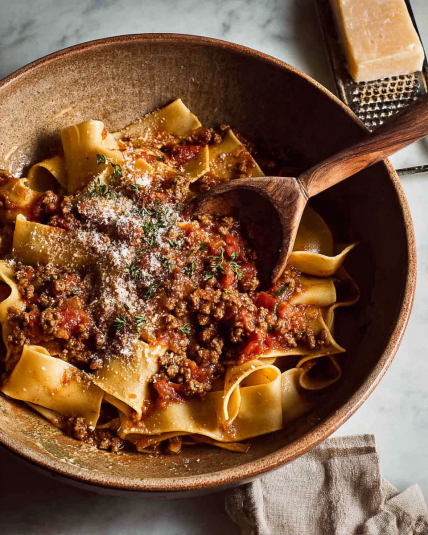
How to Master the Perfect Classic Bolognese Sauce (My Secret Method)
Start with patience. Let the onion, celery, and carrot soften until they smell sweet and look glossy—that’s your foundation. Add the meat and cook slowly, breaking it apart gently so it stays tender. Tomato paste goes in early to caramelize a bit; wine follows to gather up the browned bits that hold all the flavor.
Then comes the milk. It tempers the acidity and transforms everything from “good” to “how is this so silky?” Add your tomatoes, drop in a bay leaf, lower the heat, and just let it hum away on the stove. Stir occasionally, taste often, and enjoy the way your house slowly starts to smell like a cozy Italian evening.
Chef’s Notes and Tips For A Flawless Classic Bolognese Sauce
The magic is in the simmer—minimum one hour, ideally closer to two. The sauce thickens naturally, the flavors marry, and the texture becomes almost creamy. If it ever feels too thick, a splash of broth or water does wonders.
Use both butter and olive oil for depth. And don’t skip the milk—every authentic classic Bolognese sauce recipe includes it because it makes the meat tender and the sauce mellow.
Get Creative! Easy Substitutions and Fun Variations
Swap pork for Italian sausage for added richness. Add pancetta at the beginning for smoky depth. Use white wine instead of red for a lighter flavor. Want a veggie twist? Stir in finely chopped mushrooms—they blend right in and amplify the umami.
Lighten It Up! Simple Swaps for a Healthier Classic Bolognese Sauce
Use lean ground turkey or chicken, low-fat milk, and skip the butter. Serve it over whole-wheat pasta, zucchini noodles, or spaghetti squash. Choose no-salt-added tomatoes to keep sodium in check while still enjoying a hearty slow simmer Italian bolognese experience.
And there you have it! Don’t forget to let us know how your sauce turns out, and check out our other cozy Recipes.
Are You Curious About Anything Else? Take a Look at the Most Frequently Asked Questions We Get About This Recipe
1. What makes an authentic classic Bolognese sauce recipe different from regular meat sauce?
Traditional Bolognese is slow-cooked and built layer by layer, starting with a soffritto and incorporating milk—something many quick meat sauces skip. This creates a more velvety, mellow flavor instead of a sharp, tomato-forward one. The long cooking time breaks the meat down almost into tiny strands, giving that signature luxurious texture.
Milk and wine also balance acidity in a way standard sauces usually don’t. That’s why authentic classic Bolognese sauce has such a deep, comforting, slow-simmer flavor even though the ingredients are simple.
2. Why does Bolognese need milk?
Milk tenderizes the meat while softening tomato acidity. Without it, the sauce can taste harsh or overly acidic. As the milk cooks down, it melts into the sauce and creates that signature creamy, rich texture that makes Bolognese feel luxurious.
Adding dairy is a tradition straight from Bologna, so if you skip it, you’re essentially making a different type of ragu—not a traditional meat ragu for pasta.
3. How long should Bolognese simmer for best flavor?
At least one hour, ideally closer to two. A slow simmer allows ingredients to meld, the liquid to reduce naturally, and the meat to soften until it almost dissolves into the sauce. Fast-cooking versions simply can’t develop the same depth.
If you’re short on time, even 45 minutes will give you a delicious weeknight Bolognese, but longer is always better.
4. Can I make classic Bolognese sauce ahead of time?
Absolutely—and it tastes even better the next day. The flavors deepen, the sauce thickens, and reheating revives everything beautifully. Store in the refrigerator for up to 4 days or freeze for 3 months.
Reheated slow simmer Italian Bolognese is often richer than the original batch.
5. What pasta shapes work best with this sauce?
Tagliatelle is traditional, but pappardelle, rigatoni, and even lasagna sheets love this sauce. You want a noodle that can hold onto the thick, hearty ragu; thinner shapes like spaghetti don’t showcase it as well.
6. Can I make this sauce alcohol-free?
Yes—replace the wine with beef broth plus a teaspoon of vinegar. You still get acidity and depth without any alcohol. The sauce will still be robust, rich, and full of flavor.
7. Why does my Bolognese taste too acidic?
It likely needs more simmer time or a splash of milk to balance the tomatoes. You can also add a tiny pinch of sugar, but usually dairy and patience solve the issue.
8. How do I keep Bolognese from turning dry?
Keep the heat low and add small splashes of broth or water while simmering. True rich and hearty Bolognese sauce with milk should stay loose and silky, not stiff or pasty.
Classic Bolognese Sauce
4
servings30
minutes40
minutes300
kcalIngredients
Olive oil + butter
Onion, carrots, celery
Ground beef + ground pork
Tomato paste
Red wine
Whole milk
Crushed tomatoes or passata
Salt, pepper, bay leaf
Pasta of choice
Directions
- Start with patience. Let the onion, celery, and carrot soften until they smell sweet and look glossy—that’s your foundation. Add the meat and cook slowly, breaking it apart gently so it stays tender. Tomato paste goes in early to caramelize a bit; wine follows to gather up the browned bits that hold all the flavor.
- Then comes the milk. It tempers the acidity and transforms everything from “good” to “how is this so silky?” Add your tomatoes, drop in a bay leaf, lower the heat, and just let it hum away on the stove. Stir occasionally, taste often, and enjoy the way your house slowly starts to smell like a cozy Italian evening.
