
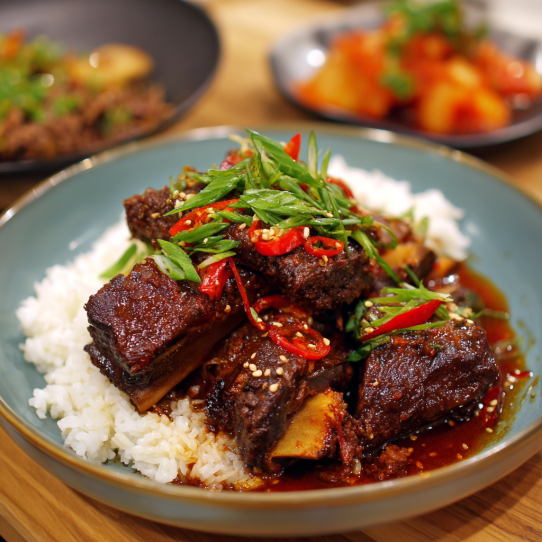
There’s something about slow-cooked food that just hits different — you can’t rush it, and honestly, that’s kind of the point. I don’t make these beef short ribs often, because they take their sweet time, but when I do… oh, it’s an event. The smell alone is worth it.
I remember the first time I made this dish on my own — my kitchen looked like chaos. There were bones everywhere, onions half peeled, soy sauce on the counter, and me wondering if all this effort was even going to be worth it. But somewhere around the 40-minute mark, the smell started to change — it went from “just cooking” to that deep, warm, sweet-savory aroma that makes you stop and go, oh wow, this is going to be good.
This dish is Korean-inspired — called “Galbi Jjim” — and it’s one of those meals that feels like a hug in a bowl. Tender beef that just falls apart with your chopsticks, vegetables that soak up all that glossy sauce, and a broth so rich and slightly sweet it clings to the rice when you scoop it up. It’s not fancy. It’s not quick. But it’s one of those recipes that makes you slow down — not just while cooking, but while eating, too.
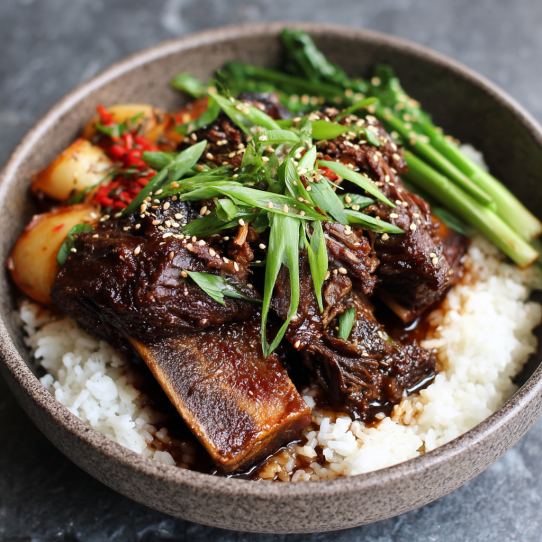
I love serving it with a big bowl of steamed white rice and a few sides of kimchi. But honestly? Even on its own, it’s perfect. The beef, the sauce, the vegetables — it’s got everything you want in one pot.
And if you have leftovers (you won’t, but if you do), it somehow tastes even better the next day. That’s the secret no one tells you — the sauce thickens, the flavor deepens, and it becomes pure magic.
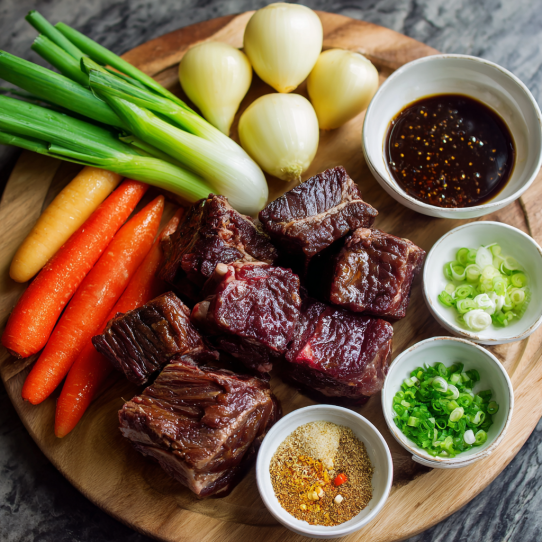
Ingredients
- 2½ lbs (1.1 kg) beef short ribs, cut into 2–3 inch pieces
- 1 large carrot, cut into thick chunks
- 1 medium potato, peeled and cut into large chunks
- 1 medium onion, quartered
- 6–8 chestnuts, peeled (optional but so cozy if you have them)
- 2 green onions, cut into 2-inch pieces
- 1 tbsp sesame oil
- 1 tsp toasted sesame seeds, for garnish
For the Braising Sauce:
- ½ cup soy sauce
- ¼ cup brown sugar
- 3 tbsp rice wine (or mirin)
- 2 tbsp honey
- 1 tbsp minced garlic
- 1 tbsp grated ginger
- 1 small Asian pear or apple, grated (for tenderizing)
- ½ medium onion, grated
- 1 cup water or beef broth
- ¼ tsp black pepper
Instructions
- Prep the Ribs
Soak the ribs in cold water for about an hour — it helps draw out the blood and keeps the broth clean. Change the water once or twice. Drain, rinse, and set aside. - Parboil
Cover the ribs with water in a large pot and bring to a boil. After 5 minutes, drain it all out. This step gets rid of the scum and gives you a smoother, cleaner sauce later. Rinse the ribs gently. - Make the Braising Sauce
In a bowl, mix together the soy sauce, brown sugar, rice wine, honey, garlic, ginger, grated pear, grated onion, water (or broth), and black pepper. It should smell sweet and garlicky — that’s how you know you’re doing it right. - Braise
Put the ribs and the sauce in a big pot. Add just enough extra water to cover the ribs. Bring it to a boil, then drop it to low heat. Cover it and let it simmer for about 45 minutes. Your kitchen will start to smell incredible — like something slow and comforting. - Add the Vegetables
Add the carrots, potatoes, onions, and chestnuts. Keep simmering another 30–40 minutes, stirring now and then. The sauce will thicken, and the beef should start falling off the bone. Skim off any extra fat on top if you want it cleaner (or don’t — that’s flavor). - Finish
When everything’s tender and glossy, drizzle in sesame oil and toss gently. Sprinkle green onions and sesame seeds on top right before serving.
To Serve:
Serve it piping hot with white rice and some kimchi on the side. If you can, make it a day before — I swear, the flavor deepens overnight and it’s even better when reheated.
Recipe FAQs
1. Can I skip the soaking step?
Technically yes, but I wouldn’t. That soaking pulls out the blood and makes the broth much cleaner. If you skip it, your sauce might look cloudy or have a slightly metallic taste. It’s worth the extra 30 minutes — just throw the ribs in a bowl of cold water and go scroll your phone.
2. What if I don’t have an Asian pear?
No big deal. A regular apple works fine — it adds a bit of sweetness and helps tenderize the meat. Some people even use a splash of pineapple juice, but I like the subtle flavor of pear or apple better.
3. My sauce turned too salty — can I fix it?
Totally. Just add a splash of water or a bit more brown sugar. Some people even throw in a small potato to absorb the salt (old kitchen trick from my mom). Don’t stress — the beauty of this dish is that it forgives you.
4. Can I use a slow cooker or Instant Pot?
Oh yes. For a slow cooker, 6–7 hours on low works beautifully. For Instant Pot, about 35–40 minutes on high pressure, then add the veggies and cook another 10–15 minutes on sauté mode to thicken the sauce. Still tastes amazing.
5. Why does it taste even better the next day?
Because the flavors have time to settle and mingle. The fat firms up overnight (you can skim it off easily if you want), and when you reheat it, everything just melts together again — the sauce gets thicker, the meat softer, and that first bite… just hits deeper.
Braised Beef Short Ribs (Galbi Jjim — Korean-Style Comfort Food)
4
servings30
minutes40
minutes300
kcalIngredients
2 ½ lbs (1.1 kg) beef short ribs, cut into 2–3 inch pieces
1 large carrot, cut into thick chunks
1 medium potato, peeled and cut into large chunks
1 medium onion, quartered
6 –8 chestnuts, peeled (optional but so cozy if you have them)
2 green onions, cut into 2-inch pieces
1 tbsp sesame oil
1 tsp toasted sesame seeds, for garnish
For the Braising Sauce:
½ cup soy sauce
¼ cup brown sugar
3 tbsp rice wine (or mirin)
2 tbsp honey
1 tbsp minced garlic
1 tbsp grated ginger
1 small Asian pear or apple, grated (for tenderizing)
½ medium onion, grated
1 cup water or beef broth
¼ tsp black pepper
Directions
- Prep the Ribs
- Soak the ribs in cold water for about an hour — it helps draw out the blood and keeps the broth clean. Change the water once or twice. Drain, rinse, and set aside.
- Parboil
- Cover the ribs with water in a large pot and bring to a boil. After 5 minutes, drain it all out. This step gets rid of the scum and gives you a smoother, cleaner sauce later. Rinse the ribs gently.
- Make the Braising Sauce
- In a bowl, mix together the soy sauce, brown sugar, rice wine, honey, garlic, ginger, grated pear, grated onion, water (or broth), and black pepper. It should smell sweet and garlicky — that’s how you know you’re doing it right.
- Braise
- Put the ribs and the sauce in a big pot. Add just enough extra water to cover the ribs. Bring it to a boil, then drop it to low heat. Cover it and let it simmer for about 45 minutes. Your kitchen will start to smell incredible — like something slow and comforting.
- Add the Vegetables
- Add the carrots, potatoes, onions, and chestnuts. Keep simmering another 30–40 minutes, stirring now and then. The sauce will thicken, and the beef should start falling off the bone. Skim off any extra fat on top if you want it cleaner (or don’t — that’s flavor).
- Finish
- When everything’s tender and glossy, drizzle in sesame oil and toss gently. Sprinkle green onions and sesame seeds on top right before serving.
