
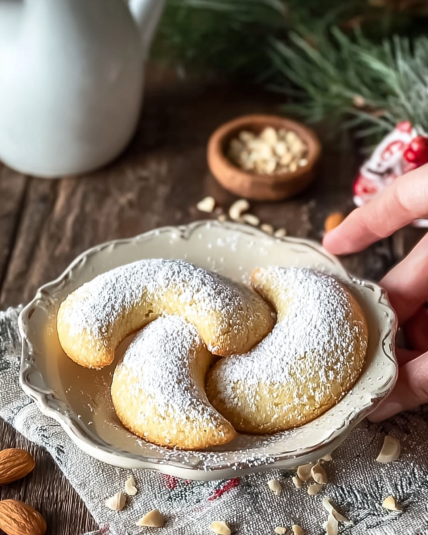
There’s something about almond crescent cookies that feels instantly familiar, even if you didn’t grow up baking them. The shape, the delicate crumb, the snowy coating of powdered sugar—it all whispers comfort.
I first made these on a quiet afternoon when the house felt a little too still. No big occasion, no guests coming over. Just a craving for something gentle and nostalgic.
As they baked, the kitchen filled with that unmistakable almond aroma—warm, slightly sweet, and almost cozy enough to be a blanket. I remember opening the oven and thinking, oh… these are special.
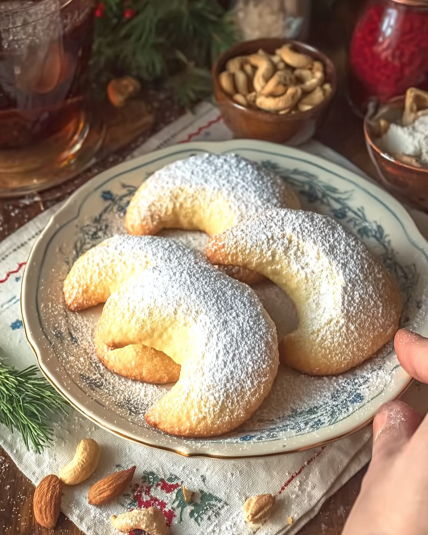
They’re soft without being fragile. Rich without being heavy. Sweet, but never loud about it.
These are the cookies you reach for with tea, or tuck into a tin for later, or make “just because” and then end up sharing anyway.
They don’t try to impress. And somehow, that’s exactly why they do.
If you’ve ever wanted a cookie that melts the second it hits your tongue—this is it.
Recipe Resume (Why You’ll Love Them)
- Ultra-soft, melt-in-your-mouth texture
- Rich almond flavor without bitterness
- No chilling required
- Simple pantry ingredients
- Perfect for holidays or everyday baking
- Not overly sweet
- Elegant, classic shape
- Stores beautifully
Why This Soft Almond Crescent Cookies Recipe Is The Only One You’ll Ever Need
The first time I served these, someone asked if they were “from a bakery.” That tiny pause before answering felt like a win.
These cookies have roots in classic European baking but feel right at home on any American cookie plate. They’re timeless, unfussy, and quietly impressive.
Cuisine: European-inspired / American classic
What You Really Need to Make This Amazing Soft Almond Crescent Cookies (Simplified)
- Unsalted butter, softened
- Powdered sugar
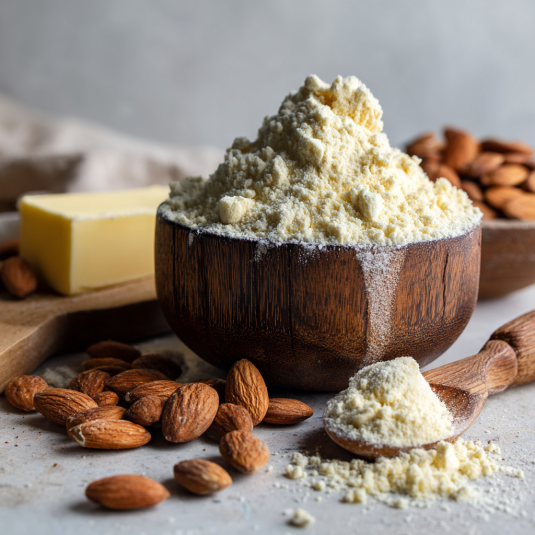
- Almond flour or finely ground almonds
- All-purpose flour
- Vanilla extract
- Almond extract
- Salt
- Extra powdered sugar (for coating)
How to Master the Perfect Soft Almond Crescent Cookies (My Secret Method)
Start with butter that’s truly soft—not melted, not cold. Cream it gently with powdered sugar until it looks pale and fluffy, like it’s holding air.
Add vanilla and almond extract and pause for a second. That scent? That’s your preview.
Fold in the dry ingredients slowly. The dough should feel soft, almost plush, but not sticky. When you roll it between your palms, it should behave nicely without cracking.
Shape small ropes and curve them into crescents. Don’t overthink the shape—slightly imperfect looks charming here.
Bake just until the bottoms are barely golden. The tops should stay pale. That’s how you know they’ll stay tender.
Roll them in powdered sugar while warm, then again once cooled. Trust me on the double coat.
Chef’s Notes and Tips For A Flawless Soft Almond Crescent Cookies
Don’t overbake. These cookies don’t brown much, and that’s intentional. Pull them early—they finish setting as they cool.
Use finely ground almonds or almond flour for the smoothest texture. Coarse grinds can make the cookies crumbly instead of soft.
Get Creative! Easy Substitutions and Fun Variations
Swap almond extract for hazelnut for a nutty twist. Add orange zest for a subtle citrus note that pairs beautifully with almonds.
Dip the ends in melted dark chocolate once cooled for a more festive version—especially around the holidays.
Lighten It Up! Simple Swaps for a Healthier Soft Almond Crescent Cookies
Replace part of the butter with plant-based butter or light butter alternatives. Use a reduced-sugar powdered sweetener for dusting.
Almond flour already adds healthy fats, making these more balanced than many traditional cookies.
And There You Have It!
Soft, buttery almond crescent cookies that feel both nostalgic and timeless. Bake a batch, share a few, and secretly keep the rest. Don’t forget to explore our other cozy cookie recipes while you’re here.
Are You Curious About Anything Else? Take a Look at the Most Frequently Asked Questions We Get About This Recipe:
1. Why are my almond crescent cookies not soft?
Overbaking is the most common reason. These cookies should come out pale, with just a hint of color underneath.
Also, measuring flour carefully matters. Too much flour can dry the dough and affect that melt-in-your-mouth texture.
2. Can I make soft almond crescent cookies ahead of time?
Absolutely. In fact, they taste even better the next day once the flavors settle.
Store them in an airtight container, and they’ll stay soft for several days without losing texture.
3. What’s the best almond flavoring to use?
A combination of almond extract and real almond flour gives the most balanced flavor.
Too much extract alone can taste artificial, so moderation is key for traditional almond crescent cookies.
4. Are almond crescent cookies the same as vanillekipferl?
They’re very similar. Vanillekipferl are the European cousin, traditionally made with nuts and vanilla.
This version leans slightly American but keeps the classic spirit and softness intact.
5. Can I freeze almond crescent cookie dough?
Yes, the dough freezes well. Shape the crescents first, then freeze on a tray before transferring to a bag.
Bake directly from frozen, adding just a minute or two to the baking time.
6. Why do you roll them in powdered sugar twice?
The first roll melts slightly and sticks. The second creates that signature snowy finish.
It’s a small step that makes a big difference in look and sweetness balance.
7. Can I make these gluten-free?
Yes. Use a good-quality gluten-free all-purpose flour blend.
Combined with almond flour, the texture stays tender and satisfying.
8. How do I store soft almond crescent cookies properly?
Keep them in a sealed container at room temperature, layered with parchment.
Avoid the fridge—it dries them out and dulls the almond flavor.
Irresistibly Soft Almond Crescent Cookies for Every Craving
4
servings30
minutes40
minutes300
kcalIngredients
Unsalted butter, softened
Powdered sugar
Almond flour or finely ground almonds
All-purpose flour
Vanilla extract
Almond extract
Salt
Extra powdered sugar (for coating)
Directions
- Start with butter that’s truly soft—not melted, not cold. Cream it gently with powdered sugar until it looks pale and fluffy, like it’s holding air.
- Add vanilla and almond extract and pause for a second. That scent? That’s your preview.
- Fold in the dry ingredients slowly. The dough should feel soft, almost plush, but not sticky. When you roll it between your palms, it should behave nicely without cracking.
- Shape small ropes and curve them into crescents. Don’t overthink the shape—slightly imperfect looks charming here.
- Bake just until the bottoms are barely golden. The tops should stay pale. That’s how you know they’ll stay tender.
- Roll them in powdered sugar while warm, then again once cooled. Trust me on the double coat.
