
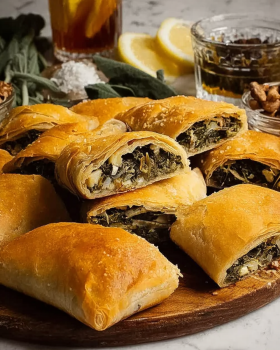
There’s something about spanakopita that feels like home, even if you didn’t grow up eating it. Maybe it’s the smell—spinach wilting gently, dill waking up in warm olive oil, butter melting into paper-thin phyllo. It’s comforting before it even hits the oven.
The first time I made this Greek spinach and feta pie, I was convinced I’d mess it up. Phyllo scared me. It crackled too loudly. Tore if I breathed wrong. I hovered like a nervous parent.
Then it baked. Golden. Loudly flaky. The kind of flaky that rains crumbs onto the counter and makes you grin.
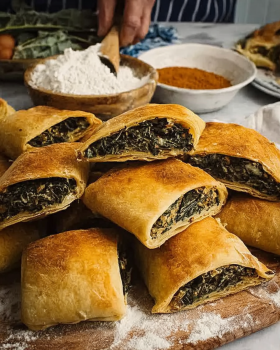
Spanakopita isn’t just a recipe—it’s a rhythm. Layer, brush, relax. It’s forgiving in the best way, generous with flavor, and deeply satisfying to make with your hands.
It’s also one of those dishes that somehow works for everything: brunch, lunch, dinner, leftovers straight from the fridge (don’t lie).
If you’ve been searching for an authentic spanakopita recipe that feels doable and deeply real—this is it.
Recipe Resume (Why You’ll Love This—Fast)
Ultra-crispy phyllo layers.
Savory, herb-packed filling.
Perfect feta-to-spinach balance.
Authentic Greek flavor.
Make-ahead friendly.
Freezer-friendly.
Crowd-approved.
Accidentally impressive.
Why This Spanakopita (Greek Spinach and Feta Pie) Is The Only One You’ll Ever Need
Cuisine: Greek / Mediterranean
This is the spanakopita I make when friends say, “I don’t usually like spinach.” (They always go back for seconds.) It became a staple after a slightly chaotic family dinner where the pie disappeared faster than the roast chicken.
What makes it special isn’t fancy tricks—it’s restraint. Not too much egg. Not drowning in cheese. Just enough herbs to make the spinach feel alive.
It’s balanced. Crisp. Comforting. And once you nail it, you’ll never need another version.
What You Really Need to Make This Amazing Spanakopita (Simplified)
- Phyllo dough
- Fresh spinach (or frozen, well-drained)
- Feta cheese
- Eggs
- Onion or scallions
- Fresh dill
- Fresh parsley
- Olive oil
- Unsalted butter
- Salt & black pepper
How to Master the Perfect Spanakopita (My Secret Method)
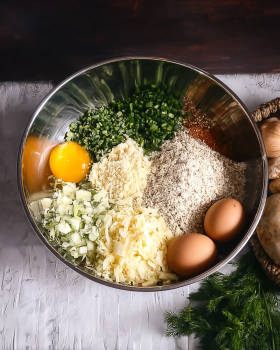
Start with the filling. Sauté onions gently until soft and sweet. Add spinach and let it collapse—no rushing. Take it off the heat and let it cool slightly before mixing in feta, herbs, eggs, and seasoning. Taste. Adjust. Trust your instincts.
Now the phyllo. Keep it covered with a towel like it’s taking a nap. Brush your pan with butter and olive oil, then layer phyllo one sheet at a time, brushing lightly. Not soaked—just glistening.
Spread the filling evenly. Add more phyllo on top, same gentle brushing, tucking the edges like you’re wrapping something precious.
Score the top before baking (future you will be grateful). Bake until deeply golden and audibly crisp. Let it rest. Yes, waiting is hard—but it sets beautifully.
Chef’s Notes and Tips For A Flawless Spanakopita
First—spinach moisture is everything. If using frozen spinach, squeeze it like you mean it. Excess water is the enemy of crisp phyllo.
Second—don’t overwork the phyllo. Tears happen. It’s fine. Rustic spanakopita is still perfect spanakopita. Butter hides sins.
Get Creative! Easy Substitutions and Fun Variations
Swap half the spinach for Swiss chard or kale. Add leeks instead of onions for sweetness.
You can also make this as individual triangles—great for parties and freezing. Same filling, different vibe.
Lighten It Up! Simple Swaps for a Healthier Spanakopita
Use olive oil only instead of butter for a lighter, dairy-reduced version. Reduce feta slightly and add more herbs for flavor without heaviness.
For a lower-carb option, skip phyllo entirely and bake the filling as a crustless spinach-feta bake—it’s surprisingly good.
Closing
And there you have it—crispy, savory traditional spanakopita with phyllo that feels like a small celebration every time you slice it. Let me know how yours turns out, and don’t forget to check out more of our favorite recipes.
Are You Curious About Anything Else? Take a Look at the Most Frequently Asked Questions We Get About This Recipe:
1. What makes this an authentic spanakopita recipe?
Authentic spanakopita relies on simple ingredients—spinach, feta, herbs, eggs, and phyllo—without heavy creams or extra cheeses. The balance is key.
This recipe stays true to traditional Greek technique, especially the light egg binding and generous use of dill, which gives spanakopita its signature flavor.
2. Can I use frozen spinach for Greek spinach and feta pie?
Yes, frozen spinach works beautifully and is very common in Greece. The key is removing every bit of excess moisture.
Thaw fully, squeeze thoroughly, and even pat dry with paper towels. Done right, you won’t taste a difference.
3. Why is my spanakopita soggy on the bottom?
Sogginess usually comes from excess moisture in the filling or too little fat between phyllo layers.
Make sure your spinach is dry and your bottom phyllo layers are well-brushed. A hot oven also helps set the crust quickly.
4. Can I make spanakopita ahead of time?
Absolutely. Assemble the pie, cover tightly, and refrigerate up to 24 hours before baking.
You can also bake it fully and reheat—it stays crisp surprisingly well.
5. Can spanakopita be frozen?
Yes. Freeze unbaked spanakopita for best texture. Bake straight from frozen, adding extra time.
Baked leftovers can also be frozen, though the phyllo will be slightly softer when reheated.
6. What’s the best feta for homemade spanakopita?
Use Greek feta made from sheep’s milk (or sheep and goat). It’s creamier, tangier, and melts into the filling better.
Avoid pre-crumbled feta—it’s drier and less flavorful.
7. How do I keep phyllo dough from drying out?
Always keep unused phyllo covered with a clean, slightly damp towel. Exposure to air dries it quickly.
Work calmly and don’t rush—phyllo rewards patience.
8. Is spanakopita served hot or cold?
Both! Warm spanakopita is crisp and comforting, while room-temperature slices are perfect for picnics and lunchboxes.
In Greece, it’s often enjoyed at all temperatures—whatever the moment calls for.
Spanakopita (Greek Spinach and Feta Pie)
4
servings30
minutes40
minutes300
kcalIngredients
Phyllo dough
Fresh spinach (or frozen, well-drained)
Feta cheese
Eggs
Onion or scallions
Fresh dill
Fresh parsley
Olive oil
Unsalted butter
Salt & black pepper
Directions
- Start with the filling. Sauté onions gently until soft and sweet. Add spinach and let it collapse—no rushing. Take it off the heat and let it cool slightly before mixing in feta, herbs, eggs, and seasoning. Taste. Adjust. Trust your instincts.
- Now the phyllo. Keep it covered with a towel like it’s taking a nap. Brush your pan with butter and olive oil, then layer phyllo one sheet at a time, brushing lightly. Not soaked—just glistening.
- Spread the filling evenly. Add more phyllo on top, same gentle brushing, tucking the edges like you’re wrapping something precious.
- Score the top before baking (future you will be grateful). Bake until deeply golden and audibly crisp. Let it rest. Yes, waiting is hard—but it sets beautifully.
