
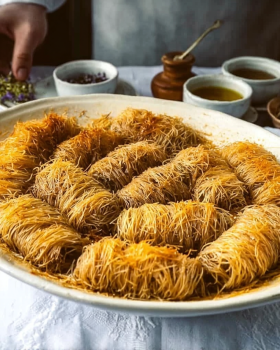
The first time I touched kataifi dough, I panicked a little. It looked like shredded wheat had a personality crisis. Thin strands everywhere. Sticking to my fingers. Slightly wild. Honestly? I almost put it back in the fridge and walked away.
But then the butter melted. The nuts toasted. And suddenly the kitchen smelled like every Greek bakery I’ve ever wandered into on vacation—warm, nutty, faintly sweet, a little intoxicating.
Kataifi is one of those desserts that looks impressive, even dramatic, but secretly wants you to relax. It doesn’t demand perfection. It asks for patience and a light hand.
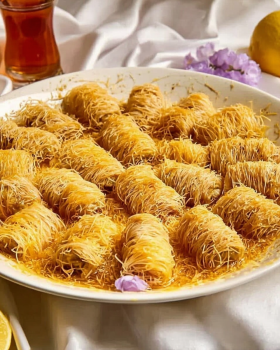
Each roll is crisp on the outside, tender inside, soaked in syrup that clings without drowning. It’s not sticky. It’s glossy. Balanced.
This is the dessert I make when I want people to say, “You made this?” with genuine disbelief.
And yes—your hands will get buttery. That’s part of it. Lean in.
Recipe Resume (Why You’ll Love This—Fast)
Golden, crackly texture.
Rich walnut-cinnamon filling.
Crisp strands that shatter gently.
Perfect syrup absorption—never soggy.
Bakery-level presentation at home.
Make-ahead friendly.
Freezer-friendly.
Shockingly doable.
Why This Kataifi (Greek String Pastry Nut Rolls) Is The Only One You’ll Ever Need
Cuisine: Greek / Mediterranean
The first time I served these at a family gathering, no one spoke for a solid minute. My aunt finally broke the silence with, “Okay… who taught you this?”
This authentic kataifi recipe became my go-to because it’s reliable. The rolls stay crisp. The syrup behaves. And the flavor hits that perfect spot between baklava and something lighter.
It’s celebratory without being heavy. Fancy without being fussy. And once you’ve made it once, it feels oddly comforting—like muscle memory kicks in.
What You Really Need to Make This Amazing Kataifi (Simplified)
- Kataifi (Greek shredded phyllo dough)
- Unsalted butter, melted
- Walnuts, finely chopped
- Sugar
- Cinnamon
- Cloves (optional, but lovely)
- Honey
- Water
- Lemon peel or juice
How to Master the Perfect Kataifi (My Secret Method)
Start with the syrup—always. Sugar, water, honey, lemon. Simmer gently until it feels slightly thickened, then let it cool completely. Cold syrup matters.
Now the kataifi. Gently tease it apart with your fingers like you’re fluffing hair. Don’t rush this. Air between the strands is what creates crispness.
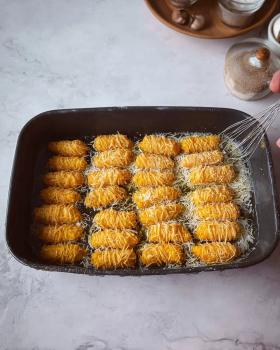
Mix the nuts with sugar and spice. Grab a small handful of kataifi, stretch it lightly, sprinkle the filling down the center, and roll—not tight, not loose. Think “secure hug.”
Butter generously. This is not the time to be shy. Bake until deeply golden and audibly crisp. Straight from oven to syrup. Spoon it over slowly. Listen. That crackle? That’s success.
Chef’s Notes and Tips For A Flawless Kataifi
First—kataifi dries fast. Keep it covered with a clean towel while you work. Dry strands won’t roll nicely and can burn before crisping evenly.
Second—butter distribution matters more than quantity. Drizzle and brush, making sure every roll is coated. Dry spots = pale, chewy patches.
Get Creative! Easy Substitutions and Fun Variations
Swap walnuts for pistachios or almonds for a slightly different flavor profile. Add orange zest to the nut filling for brightness.
You can also shape kataifi into nests instead of rolls—same flavor, different look. Great for individual servings.
Lighten It Up! Simple Swaps for a Healthier Kataifi
Use a lighter syrup with more honey and less sugar. Reduce butter slightly and brush instead of pouring.
For a more balanced dessert, serve smaller rolls with Greek yogurt on the side—it sounds unusual, but it works beautifully.
Closing
And there you have it—crispy, golden Greek kataifi nut rolls that feel straight out of a pastry shop window. Make them once, and they’ll become your secret weapon dessert. Let me know how yours turn out, and don’t forget to explore more of our favorite recipes.
Are You Curious About Anything Else? Take a Look at the Most Frequently Asked Questions We Get About This Recipe:
1. What is kataifi pastry made of?
Kataifi pastry is essentially phyllo dough that’s been finely shredded into thin strands. The ingredients are simple—flour, water, and a little starch—but the texture is what makes it special.
Because it’s so delicate, kataifi crisps beautifully when buttered and baked, creating that signature crunch you can’t get from regular phyllo sheets.
2. Is this an authentic Greek kataifi recipe?
Yes—this follows the traditional Greek method using kataifi dough, nut filling, and honey-based syrup poured over hot pastry.
While variations exist across regions, the technique of hot pastry and cold syrup is classic and essential to authentic texture.
3. Why did my kataifi turn out soggy?
Sogginess usually comes from too much syrup or syrup that’s too hot. Kataifi should be hot when syruped, but the syrup itself must be cooled.
Another culprit is underbaking. Kataifi needs deep golden color before syrup touches it—pale equals soft.
4. Can I make kataifi ahead of time?
Absolutely. In fact, kataifi improves after resting. Make it up to two days ahead and store covered at room temperature.
The flavors settle, the syrup distributes evenly, and the exterior stays crisp.
5. Can kataifi be frozen?
Yes. Freeze baked, unsyruped kataifi rolls tightly wrapped. When ready, reheat until crisp, then add fresh syrup.
Freezing after syruping isn’t recommended—it dulls the texture.
6. What nuts are best for kataifi?
Walnuts are traditional and give that earthy depth. Pistachios add color and sweetness, while almonds provide a firmer bite.
You can also blend nuts for complexity—just chop finely so the rolls stay neat.
7. How do I keep kataifi from drying out while working?
Always keep unused kataifi covered with a slightly damp towel. Exposure to air makes it brittle fast.
Work in small sections and re-cover immediately—it makes rolling far easier.
8. How is kataifi different from baklava?
Baklava uses layered phyllo sheets and tends to be richer and denser. Greek kataifi nut rolls feel lighter, crispier, and more textural.
Think of kataifi as baklava’s elegant, slightly rebellious cousin—same flavors, different experience.
Kataifi (Greek String Pastry Nut Rolls)
4
servings30
minutes40
minutes300
kcalIngredients
Kataifi (Greek shredded phyllo dough)
Unsalted butter, melted
Walnuts, finely chopped
Sugar
Cinnamon
Cloves (optional, but lovely)
Honey
Water
Lemon peel or juice
Directions
- Start with the syrup—always. Sugar, water, honey, lemon. Simmer gently until it feels slightly thickened, then let it cool completely. Cold syrup matters.
- Now the kataifi. Gently tease it apart with your fingers like you’re fluffing hair. Don’t rush this. Air between the strands is what creates crispness.
- Mix the nuts with sugar and spice. Grab a small handful of kataifi, stretch it lightly, sprinkle the filling down the center, and roll—not tight, not loose. Think “secure hug.”
- Butter generously. This is not the time to be shy. Bake until deeply golden and audibly crisp. Straight from oven to syrup. Spoon it over slowly. Listen. That crackle? That’s success.
