
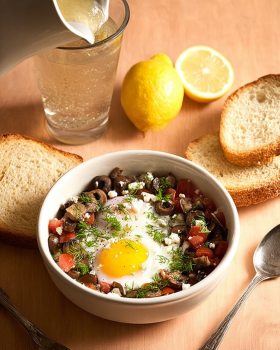
There are mornings when toast alone just won’t do it. You want something warm, saucy, and comforting—but not heavy. Something that feels like sunshine even when the sky says otherwise.
That’s exactly how this Greek baked eggs recipe entered my regular rotation. One skillet. A handful of pantry staples. And that unmistakable smell of tomatoes simmering with garlic and oregano.
The first time I made it, I wasn’t even planning breakfast. It was more of a “use what’s in the fridge” situation. A can of tomatoes, a lonely block of feta, eggs begging for purpose.
As it baked, the kitchen filled with that briny, herby aroma that makes you hover near the oven door, checking far too often.
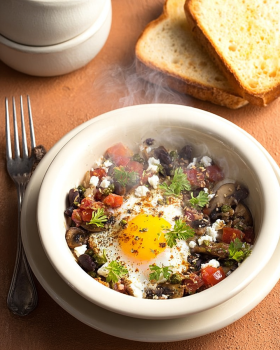
The eggs came out just set, whites tender, yolks still a little soft. The feta melted into the sauce, salty and creamy at the same time.
We scooped it up with bread straight from the pan. No plates. No rules.
That’s when I knew—this one stays.
Recipe Resume (Why You’ll Love It)
- One-pan meal
- Mediterranean flavors
- Breakfast or dinner-friendly
- Naturally gluten-free
- Protein-packed
- Cozy yet light
- Meal-prep friendly
- Always impressive
Why This Greek Baked Eggs Recipe Is The Only One You’ll Ever Need
This dish became a quiet favorite in our house. It’s what I make when friends stay over and I want something special without hovering over the stove.
It feels generous. Rustic. Like something you’d eat near the sea, bread in hand, conversation drifting.
The balance is what wins people over—bright tomato sauce, creamy feta, rich eggs. Nothing fights. Everything belongs.
And once you realize how forgiving it is? You start making it on autopilot.
Cuisine: Greek / Mediterranean
What You Really Need to Make This Amazing Greek Baked Eggs (Simplified)
- Olive oil
- Onion
- Garlic
- Crushed tomatoes
- Dried oregano
- Red pepper flakes (optional)
- Eggs
- Feta cheese
- Fresh parsley or dill
How to Master the Perfect Greek Baked Eggs (My Secret Method)
Start with olive oil and onions. Let them soften slowly until sweet, not browned. Add garlic and oregano—just until fragrant. That’s your base.
Pour in the tomatoes and let the sauce simmer gently. You’re not rushing here. It should thicken slightly and taste rounded, not sharp.
Once the sauce feels right, make little wells with the back of a spoon. Crack eggs gently into each space. Sprinkle feta everywhere—it melts better that way.
Bake until the whites are just set and the yolks still wobble slightly. Finish with herbs. Serve immediately with bread. Always bread.
Chef’s Notes and Tips For A Flawless Greek Baked Eggs
Watch the eggs closely. A minute too long and the yolks lose their magic. Pull them early—they’ll continue setting from residual heat.
Also, don’t skimp on good olive oil. It’s not background flavor here. It’s part of the sauce.
Get Creative! Easy Substitutions and Fun Variations
Add spinach or kale to the sauce before baking. Toss in olives for extra briny bite.
For a heartier version, spoon the sauce over roasted potatoes before adding eggs.
Lighten It Up! Simple Swaps for a Healthier Greek Baked Eggs
Use reduced-fat feta or less cheese overall. Add extra veggies like zucchini or bell peppers.
This dish is already naturally low-carb and gluten-free, making it a great healthy Greek baked eggs option.
Closing (Todd Wilbur Style)
And there you have it.
Simple. Satisfying. Mediterranean comfort at its best.
Make it once and it becomes one of those recipes you remember. Let me know how yours turns out—and don’t forget to explore a few more favorites while you’re here.
Are You Curious About Anything Else? Take a Look at the Most Frequently Asked Questions We Get About This Recipe:
1. What are Greek baked eggs traditionally made with?
A classic Greek baked eggs recipe uses tomatoes, olive oil, herbs, eggs, and often feta. It’s similar to shakshuka but distinctly Mediterranean in flavor.
Greek versions tend to be less spicy and more herb-forward, letting oregano and olive oil shine.
2. Can I make Greek baked eggs ahead of time?
You can prepare the tomato sauce in advance and refrigerate it for up to three days.
When ready to serve, reheat the sauce, add eggs, and bake fresh. This keeps the eggs perfectly cooked.
3. Are Greek baked eggs healthy?
Yes. Healthy Greek baked eggs are rich in protein, healthy fats, and antioxidants from tomatoes and olive oil.
They’re naturally gluten-free and easy to adapt for lower-fat diets without sacrificing flavor.
4. What’s the difference between Greek baked eggs and shakshuka?
Both feature eggs baked in tomato sauce, but Greek baked eggs lean on feta, oregano, and olive oil.
Shakshuka often includes cumin, paprika, and chili, creating a spicier, North African profile.
5. Can I make this dairy-free?
Yes. Simply skip the feta or use a dairy-free alternative.
The tomato sauce and eggs are flavorful enough to stand alone.
6. How do I keep the eggs from overcooking?
Bake uncovered and start checking early. Eggs continue cooking after removal.
Pull the dish when the whites are set but yolks still jiggle slightly.
7. What should I serve with Greek baked eggs?
Crusty bread is classic, but roasted potatoes or a simple cucumber salad work beautifully.
Anything that can soak up sauce is welcome.
8. Can I make this in individual ramekins?
Absolutely. Divide the sauce between ramekins, add eggs, and bake.
This works great for brunch gatherings and portion control with one pan Greek eggs flavor intact.
Greek Baked Eggs
4
servings30
minutes40
minutes300
kcalIngredients
Olive oil
Onion
Garlic
Crushed tomatoes
Dried oregano
Red pepper flakes (optional)
Eggs
Feta cheese
Fresh parsley or dill
Directions
- Start with olive oil and onions. Let them soften slowly until sweet, not browned. Add garlic and oregano—just until fragrant. That’s your base.
- Pour in the tomatoes and let the sauce simmer gently. You’re not rushing here. It should thicken slightly and taste rounded, not sharp.
- Once the sauce feels right, make little wells with the back of a spoon. Crack eggs gently into each space. Sprinkle feta everywhere—it melts better that way.
- Bake until the whites are just set and the yolks still wobble slightly. Finish with herbs. Serve immediately with bread. Always bread.
